The name “landscape timber” doesn’t confirm pressure treatment. We couldn’t verify a universal rule requiring every product sold as a landscape timber to receive pressure treatment, so check the exact product label before buying.
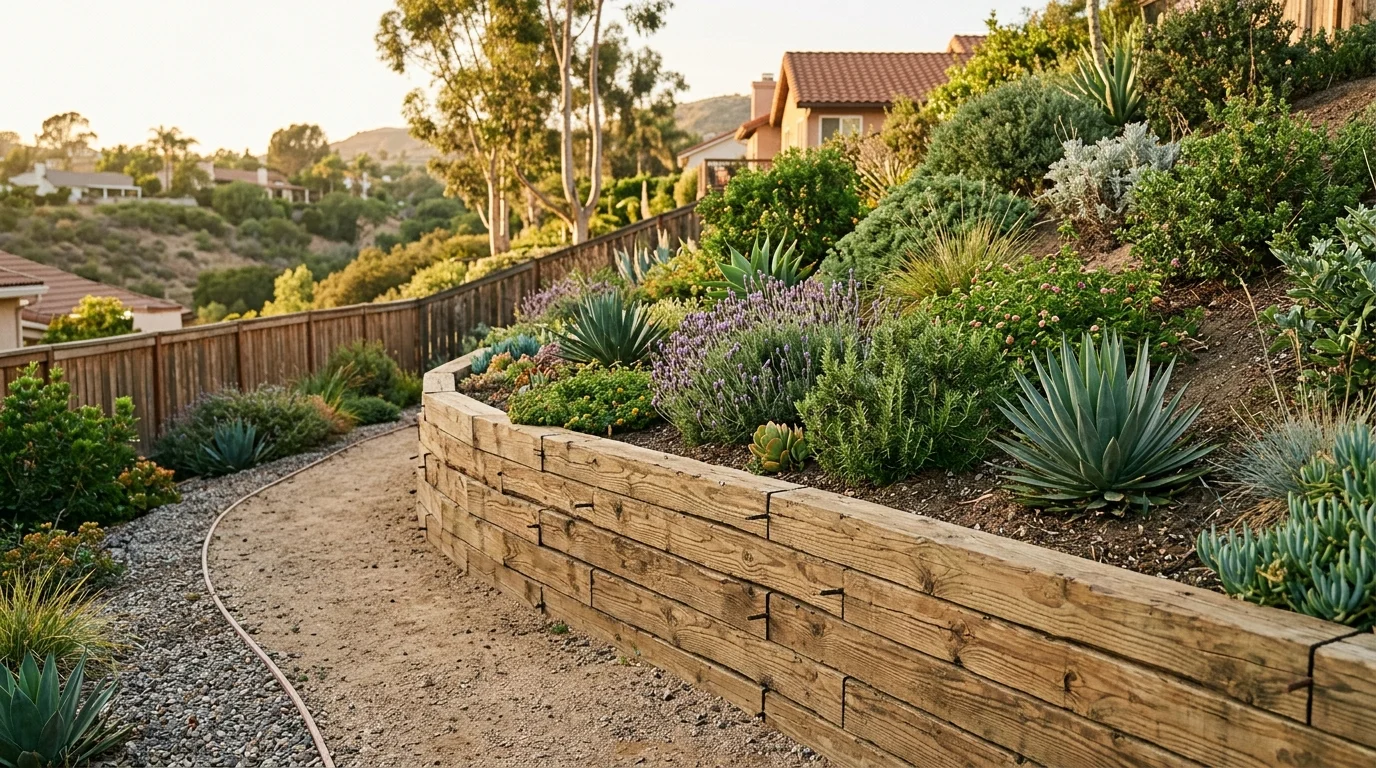
What pressure treatment does and what it does not stop
Pressure treatment is a product-specific claim. Don’t infer it from the timber’s color, smell, shape, or store display. Find the end tag, product number, invoice description, or manufacturer documentation.
The approved source record for this site doesn’t contain a verified treatment standard for landscape timbers. It also doesn’t support claims about which treatment prevents decay, insects, splitting, warping, or other damage. The manufacturer should identify the treatment and its intended application in writing.
Ask the seller or manufacturer to confirm:
- The exact product and treatment designation
- Whether the product is intended for soil contact
- Any required treatment for field cuts or drilled holes
- Compatible fasteners and connectors
- Installation limits and warranty exclusions
- Whether retaining soil is an approved application
Keep the label and technical sheet with your project records. A generic receipt reading “landscape timber” doesn’t answer those questions.
Treatment status is only one part of wall planning. The wall’s height, retained soil, drainage, backfill, nearby loads, and anchoring still need review. A timber sold for edging shouldn’t be assumed suitable for a retaining wall without written product documentation.
For a wall-specific assessment, start with our timber retaining wall referral service. Wall Pro SD connects homeowners with licensed independent contractors. The matched contractor, not Wall Pro SD, evaluates the site and performs the work.
Ground contact ratings: the label that matters
A ground-contact claim should come from the product label or manufacturer. We couldn’t confirm an approved primary source supporting a universal rating for every landscape timber. That means we won’t publish an unsupported rating code or treat one label as interchangeable with another.
Photograph the label before installation. Make sure its product number matches the invoice and technical sheet. If the label is missing, ask the supplier for documentation tied to that exact item. Don’t rely on a verbal description that can’t be matched to the product.
The documentation should answer whether the timber can touch soil and retain soil. Those aren’t assumptions a homeowner should have to make. The instructions should also identify compatible connectors, cutting guidance, and any limits involving wall dimensions or nearby loads.
A product rating doesn’t replace permit review. Inside City of San Diego limits, a retaining wall requires a building permit when any listed trigger applies. One trigger is a wall over three feet, measured from the top of the footing to its highest point. Other triggers include surcharge loads and backfill steeper than 1.5 horizontal to 1 vertical.
A driveway, walkway, structure footing, or fence can count as a surcharge under the City’s rule. Even a lower wall may need a permit when it supports one. Review the complete trigger list in City of San Diego Information Bulletin 220.
Those rules apply only inside City of San Diego limits. An unincorporated County parcel follows a different standard. Incorporated cities such as Chula Vista, Oceanside, or El Cajon require confirmation with their own building departments.
Composite timbers: where they help and what they cost
Composite products need the same document-first review. We couldn’t verify a primary-source rule defining where every composite timber may be used. We also found no approved government source publishing retaining wall prices by material.
That means a universal cost range would be guesswork. Get current, itemized quotes for the exact products under consideration. The quotes should describe the timber or composite system by manufacturer and model, not merely as “landscape timbers.”
Ask each contractor to separate the major parts of the proposal. These may include product quantities, connectors, excavation, drainage, backfill, hauling, design work, and permit work. This makes two proposals easier to compare without relying on an unsupported per-foot figure.
Before choosing composite, request written answers to these questions:
- Does the manufacturer approve the product for retaining soil?
- What wall geometry does its documentation cover?
- Which connectors and anchors does the system specify?
- Are there restrictions involving soil contact or nearby loads?
- What drainage details must accompany the system?
- Who provides the product warranty, and what does it exclude?
Don’t let appearance decide a structural application. Product instructions and the site design should agree. If the documentation doesn’t cover the proposed wall, ask a licensed professional what design path applies.
Material choice also changes the look and layout of a yard. Our guide to retaining wall materials for San Diego soils provides a broader comparison without inventing lifespan or price figures. For stepped planting areas, review terraced garden wall options with a local contractor.
Fasteners and deadmen: verify the first failure claim
You’ll often hear that fasteners or deadmen fail first. We couldn’t verify that “usually fails first” claim from an approved primary source. There’s no supported failure percentage or universal order of failure in the site’s claims ledger.
Treat every hidden connection as a documented design choice. The contractor should identify the specified fastener, connector, anchor, and layout. Each item should match the timber or composite manufacturer’s instructions and the project design.
Ask for a written scope showing:
- The exact timber or composite product
- The specified fasteners and connectors
- The anchoring or deadman layout
- The drainage and backfill plan
- Any permit or design documents
- The inspection stages, when applicable
Don’t substitute a connector because it looks similar. Ask the contractor to explain how the proposed hardware matches the product documentation. Keep that documentation with the contract and product labels.
City of San Diego Information Bulletin 221 includes material, drainage, and inspection details for the City’s standard cantilevered masonry walls. Those details aren’t universal timber-wall specifications. The standard designs are limited to qualifying masonry walls, so they shouldn’t be copied into a timber project without a project-specific basis.
Confirm the contractor’s license through the CSLB Check A License tool. CSLB allows searches by license number, business name, or contractor personnel name. The pros Wall Pro SD connects homeowners with are licensed independent contractors.
Realistic lifespan in a San Diego yard
We couldn’t verify a defensible lifespan for pressure-treated or composite landscape timbers. The approved research found no primary source supporting a fixed number for wood, composite, block, concrete, or boulder retaining walls.
A manufacturer’s written warranty isn’t the same as a predicted wall lifespan. Read its coverage, exclusions, required installation method, and maintenance terms. Ask who handles a product claim and whether labor is included. Don’t assume the contractor and manufacturer offer the same coverage.
San Diego County also isn’t one permit jurisdiction. Inside City of San Diego limits, the City’s permit triggers apply. In the unincorporated county, the permit exemption has several conditions that must all be met.
The County exemption covers walls retaining no more than three feet of soil, measured from the top of the footing to the top of retained soil. The wall also can’t exceed six feet in total height from the lowest finished grade. It must have level backfill, no other structures within six feet, no surcharge, and no flammable liquids.
That County rule doesn’t apply inside the City of San Diego or another incorporated city. Confirm the parcel’s jurisdiction before relying on any exemption. If the project is in Carlsbad, Escondido, Poway, or another city, contact that city’s building department for its current requirements.
A useful comparison focuses on documents you can verify today. Review the product label, retaining-wall approval, installation instructions, contractor scope, permit path, drainage plan, and written warranty. Those records give you a firmer decision than an unsupported lifespan promise.
When to call us
When you’re hiring for permit-required work, use a licensed retaining wall contractor who can review the product and site conditions. Wall Pro SD makes referrals and performs no construction work itself. Call us at (858) 400-4639 and we’ll connect you with a licensed local retaining wall contractor.