A Coronado yard doesn’t need a steep hillside to need retaining. Small grade changes around a planter, walk, driveway, or patio can create a real design problem. The first decision is whether the wall merely marks a boundary or holds soil and nearby loads.
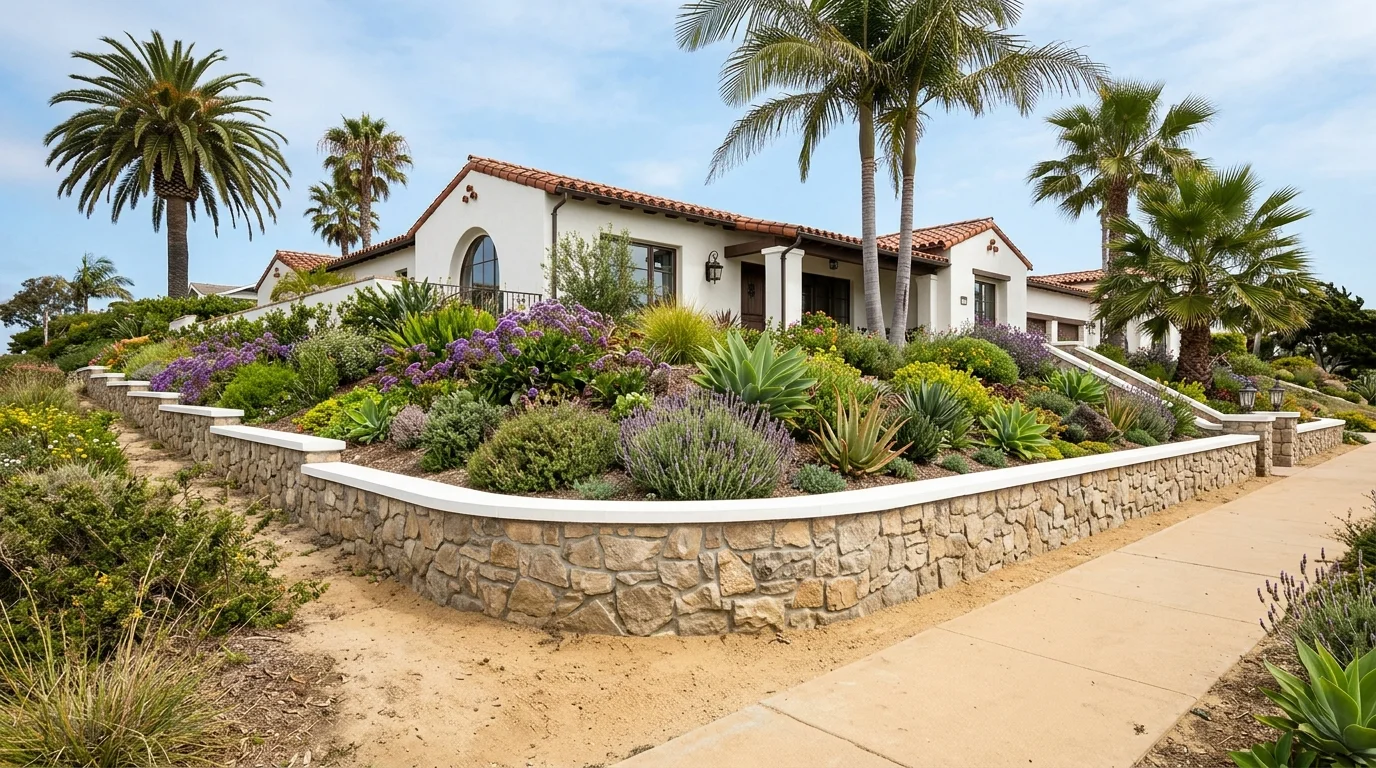
Why a flat island still needs retaining
A Coronado property can look flat from the street. The yard may tell a different story. Soil can sit above a patio, walkway, planting area, or neighboring grade. A wall in that position has more work than ordinary garden edging.
That distinction matters during planning. Decorative edging usually defines a bed. A retaining wall holds a difference in grade. Its footing, drainage, and relationship to nearby improvements need attention.
Start by identifying what sits above the proposed wall. Note any walkway, driveway, fence, footing, or heavily planted area. Don’t rely on exposed wall height alone. The buried footing and retained soil also matter when a designer reviews the project.
Low walls can also divide outdoor spaces without making a small yard feel closed. One wall might frame a courtyard planter. Another might create a level planting strip beside a walk. A corner lot near Orange Avenue may need a different layout than a bay-side yard or a property farther south toward Silver Strand.
Keep the wall’s purpose clear from the first sketch. Write down which side is higher, where water should go, and what must remain accessible. Include gates, irrigation, utilities, and property lines.
Our Coronado retaining wall referral page can help you find a local contractor for an on-site review. Wall Pro SD makes the connection. The independent contractor evaluates the property and performs the work.
Sandy soil, high water table and what that does to a footing
“Sandy soil” and “high water table” sound plausible near the coast. They aren’t parcel diagnoses. The approved primary-source record doesn’t confirm one soil profile or groundwater condition across Coronado.
Don’t let a contractor size a footing from the city name alone. Conditions can change across one property and beneath earlier improvements. Fill material, buried construction, irrigation, and previous landscaping may also affect what’s found during excavation.
Ask how the proposed footing responds to the actual site. The contractor’s scope should identify the wall material, expected retained height, footing concept, reinforcement, backfill, and drainage path. If testing or professional design is recommended, ask who will provide it and what decision it will support.
Drainage deserves its own conversation. Ask where collected water will discharge and whether the route stays within the approved project area. Don’t accept a vague arrow pointing toward a neighboring lot. Coronado’s current drainage requirements for retaining walls weren’t confirmed in the approved claims ledger, so the city’s building staff should review the proposed approach.
The retaining wall drainage options page explains the questions to bring into that discussion. It doesn’t replace a site-specific design.
If someone claims a standard footing works everywhere in Coronado, request the source. A responsible proposal should connect its dimensions and materials to observed or documented conditions. When those conditions haven’t been established, the proposal should say what must be checked before construction begins.
Planters, raised beds and low garden walls
Many Coronado projects begin as landscape improvements. A homeowner may want a white-capped planter, a raised bed beside a courtyard, or a cleaner transition around a patio. The wall can look decorative while still retaining soil.
Separate appearance decisions from structural decisions. Color, cap style, texture, and planting layout shape the finished space. Footing, reinforcement, retained height, nearby loads, and drainage define the construction scope.
Our decorative retaining wall service page shows where those goals overlap. The contractor should still explain whether the proposed feature is edging, a freestanding wall, or a retaining wall.
“Low” isn’t a permit conclusion. It’s only a visual description. The approved claims ledger doesn’t contain a verified Coronado height exemption or measurement method. Confirm the current rule with the City of Coronado before treating any garden wall as permit-exempt.
Bring a simple plan when requesting that answer. Show the wall’s full length, both grades, the footing location, and distances to property lines. Mark nearby walks, fences, driveways, structures, and irrigation. Ask whether separate planning, grading, coastal, or encroachment review applies. These are questions, not confirmed Coronado requirements.
Think about daily use too. A planter beside a narrow passage shouldn’t make access harder. Irrigation shouldn’t be left as an afterthought. Caps, corners, and transitions should match how people move through the space.
A clear written scope helps keep a decorative idea from becoming an open-ended construction project. It also gives the city reviewer and contractor the same starting information.
Salt air and material choice
A property near San Diego Bay or the Pacific side needs a material discussion grounded in product documents. “Coastal grade” and “salt-proof” aren’t useful without a named product, finish, exposure specification, and installation method.
Ask the contractor to identify every major component. That includes wall units or concrete, reinforcement, connectors, drainage parts, caps, coatings, and exposed hardware. Product data should match the proposed location and assembly.
Compare complete systems, not isolated materials. A masonry wall can include metal reinforcement, mortar, grout, drainage components, and a cap. A poured wall also depends on reinforcement, joints, drainage, and its finish. A decorative stone face may be only one part of the assembly.
No approved primary source supports a universal service-life number for retaining wall materials. Treat any lifespan claim as something the seller must document. Ask what maintenance the manufacturer requires and which conditions could limit its coverage.
The same rule applies to warranties. Get the independent contractor’s warranty terms in writing. Confirm who covers labor, materials, drainage components, and finish work. Wall Pro SD doesn’t perform construction or issue workmanship warranties.
Appearance still matters. A low, light-colored wall may fit a home with pale stucco or painted masonry. Natural stone can create a different visual weight. The right choice should fit the house without hiding how the wall is built.
Ask for samples in outdoor light. Then review them beside the paving, planting, and exterior finish. This keeps the material decision tied to the actual Coronado property.
Working within a small city’s own review process
Coronado isn’t governed by City of San Diego retaining wall rules. It also isn’t part of the unincorporated county permitting area. Don’t import either jurisdiction’s thresholds into a Coronado project.
The approved claims ledger didn’t confirm Coronado’s current retaining wall height limits, permit exemptions, fees, forms, or review times. Check those details with the City of Coronado’s building department through its official city website. Provide the property address and project details when asking.
The City of San Diego’s Information Bulletin 220 illustrates why jurisdiction matters. Inside San Diego city limits, it lists several permit triggers and defines a particular height measurement. That bulletin isn’t Coronado guidance.
Ask Coronado staff several direct questions:
- Does this wall require a building permit?
- How does the city measure its height?
- Do nearby walks, driveways, fences, or structures change the review?
- Are engineered plans or site information required?
- Does another planning, grading, coastal, or encroachment review apply?
- What drawings, inspections, fees, and current review steps apply?
Bring written answers back to the contractor. That helps the proposal account for the city’s current process without guessing.
Contractor licensing is a separate state issue. California’s minor-work exemption under Business and Professions Code section 7048 applies only when the aggregate price for labor, materials, and all other items is less than $1,000 and no building permit is required. It doesn’t apply when someone advertises as a contractor or employs another person for the work. Dividing a larger project into smaller contracts doesn’t create the exemption.
Before signing, verify the contractor through the CSLB Check A License tool. CSLB lets consumers search by license number, business name, contractor personnel name, or Home Improvement Salesperson registration.
When to call us
Call when a Coronado wall will retain soil, sit near another improvement, or needs permit and drainage review. The pros we connect you with are licensed, and Wall Pro SD performs no construction itself. Call us at (858) 400-4639 and we’ll connect you with a licensed local retaining wall contractor.