For retaining wall services in La Mesa, start with a licensed local contractor who can inspect the wall, drainage, access, and nearby landscaping together. Wall Pro SD connects homeowners with independent local pros for repairs, replacements, and new wall projects.
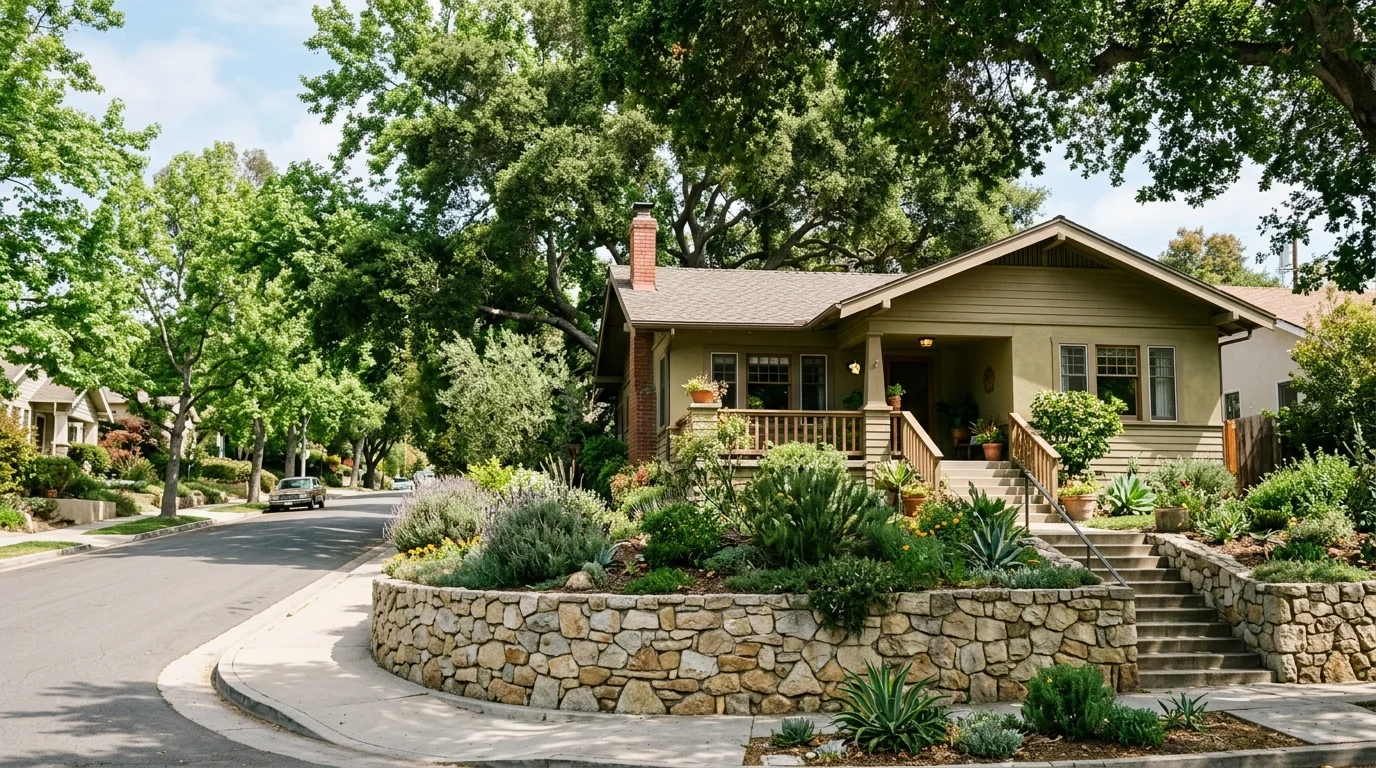
Older neighborhoods, mature trees and tight side yards
A La Mesa retaining wall project can look simple from the street. The working area behind the house may tell another story. Older bungalow lots can have narrow gates, established planting beds, irrigation lines, and little room between neighboring homes.
A property near La Mesa Boulevard may need materials moved through a side yard. A sloped lot toward Mount Helix may require a different access plan. Those conditions affect how a contractor approaches excavation, material delivery, and debris removal. They should be discussed before the scope is written.
Start by showing the contractor every available entrance. Identify gates, steps, fences, patios, and planted areas that must remain. Mention any buried irrigation you know about. If another property sits close to the wall, point out the property line and any shared access concern.
The wall also needs to be viewed as part of the yard. A low wall beside a driveway faces different conditions than a garden wall. A wall below a tree canopy presents different choices than one in an open side yard. Soil height, nearby loads, wall material, and visible movement all belong in the assessment.
Our La Mesa retaining wall service connects you with local pros who can review those conditions. The brand doesn’t perform construction. The independent contractor you select develops the scope and completes the work.
Before accepting a proposal, ask how access affects the planned method. The answer should cover excavation space, material staging, and protection for nearby surfaces. A clear plan matters when there’s no open route from the street.
Walls built before current drainage practice
An older wall doesn’t reveal its full construction from the face. Stone veneer, stucco, planting, and soil can hide the footing and drainage details. A visible outlet may also be buried, blocked, disconnected, or difficult to identify.
Don’t assume the wall has no drainage because you can’t see a pipe. Don’t assume an opening proves the system works, either. Ask the contractor to inspect the wall’s exposed surfaces, the grade above it, and any accessible drainage outlet.
Show the contractor where water appears after irrigation or rain. Point out dark staining, damp soil, erosion, or sediment near an outlet. Mention changes made around the wall, including new paving, raised planting beds, fences, or redirected downspouts. These observations help define what needs closer review.
A drainage assessment should address more than one component. Ask where water enters the retained area, how it moves behind the wall, and where the proposed system will discharge. The plan should also account for adjacent property and existing hardscape. Our page on drainage solutions for retaining walls explains the service questions worth discussing.
La Mesa’s exact drainage and permit requirements weren’t confirmed in the approved source material for this article. The contractor should verify the current rules with the City of La Mesa before construction. Don’t substitute City of San Diego guidance for a La Mesa address. The jurisdictions publish their own requirements.
If the contractor recommends replacement, ask what was observed and which detail drives that recommendation. If repair remains an option, ask how the drainage work connects with the retained portion of the wall. The proposal should make that relationship clear.
Roots, irrigation and the two together
A mature tree can be central to a La Mesa yard. It can also complicate access and planning near a retaining wall. The useful first step isn’t guessing whether roots caused a crack. It’s documenting what can actually be seen.
Note where the trunk sits in relation to the wall. Photograph visible roots, lifted paving, separated wall sections, and recent movement. Mark irrigation emitters, sprinkler heads, valves, and supply lines. Tell the contractor when each irrigation zone runs and where water collects.
Avoid approving broad root cutting from a wall proposal alone. Ask whether a qualified tree professional should review the root area first. The wall contractor and tree professional may need to coordinate their recommendations. That’s especially helpful when the tree’s future and the wall layout are both priorities.
Irrigation deserves its own review. A line may cross the excavation area even when its emitters sit elsewhere. A repair scope should identify which lines need protection, relocation, or separate work. It should also state who handles that part of the job.
Look at the whole planting bed, not only the damaged section. Recent landscaping changes may have altered soil height or watering patterns. Share those changes with the contractor without trying to diagnose them yourself.
When comparing proposals, look for a sequence. The contractor should explain what gets exposed first, when concealed conditions are evaluated, and how scope changes are approved. That’s more useful than a vague promise to address whatever appears.
This planning protects the character of the yard without treating every root or irrigation line as the problem. It gives each specialist a defined role and gives you a clearer basis for choosing the final wall approach.
La Mesa’s permit counter
La Mesa has its own local approval process. City of San Diego retaining wall rules don’t automatically apply to property inside La Mesa. That distinction matters because published permit triggers can differ by jurisdiction.
The approved research for this article didn’t confirm a La Mesa-specific height threshold, grading trigger, fee, or review timeline. Confirm the current requirements directly with the City of La Mesa permit counter before relying on a design or construction schedule. Ask whether the address falls within city limits and which department reviews the proposed work.
Bring useful project details to that conversation. Include the wall location, dimensions, retained-soil height, total exposed height, backfill slope, and nearby loads. Mention driveways, fences, structures, tiered walls, and planned excavation. Ask whether building, grading, planning, or another approval applies.
Don’t rely on the nearby City of San Diego Information Bulletin 220 as La Mesa’s rule. It applies inside City of San Diego limits. It can show why precise measurements and nearby loads matter, but it can’t answer La Mesa’s permit question.
California’s minor-work license exemption is also narrow. Under Business and Professions Code section 7048, the aggregate contract price must be less than $1,000 and the work can’t require a building permit. The exemption doesn’t cover someone advertising as a contractor, employing another person on the work, or splitting a larger project into smaller contracts.
For contractor selection, use the CSLB Check A License tool. It allows searches by license number, business name, or contractor personnel name. CSLB publishes separate descriptions for Class A, C-8 concrete, and C-29 masonry work. It doesn’t publish a blanket rule assigning every retaining wall to one classification, so the fit depends on the proposed construction.
Repair-first thinking on a character home
Repair-first thinking begins with evidence, not a promise to preserve everything. On an older La Mesa property, the wall may contribute to the home’s street presence. Its stone face, cap, color, or planting relationship may be hard to duplicate.
Tell the contractor which features matter before requesting a scope. Photograph the wall from several angles. Save any loose facing pieces or caps rather than discarding them. If you have old plans, permits, surveys, or landscape drawings, make them available for review.
Ask the contractor to separate visible finish concerns from structural and drainage concerns. A proposal may address isolated facing, displaced units, drainage work, partial reconstruction, or full replacement. The correct scope can’t be chosen from age alone.
Repair also shouldn’t mean hiding movement behind a new finish. Ask what will remain, what will be removed, and what conditions become visible during opening. The proposal should explain how concealed discoveries will be documented and priced before extra work proceeds.
If replacement is recommended, the new wall doesn’t have to ignore the property’s character. Discuss face material, cap shape, wall alignment, planting space, and transitions at steps or walkways. Our decorative retaining wall options page offers a starting point for that design conversation.
Compare bids by scope, not by the last number alone. Check whether each proposal includes the same demolition, hauling, drainage, finish, access, and restoration work. Confirm who handles permits and design documents. Ask what warranty the independent contractor offers, since Wall Pro SD doesn’t provide construction warranties.
A careful assessment may support repair, replacement, or a staged plan. The goal is a written scope that respects the home while addressing the conditions the contractor can verify.
When to call us
Call when a La Mesa wall shows movement, needs drainage work, or requires a new design around trees and tight access. Call us at (858) 400-4639 and we’ll connect you with a licensed local retaining wall contractor.