Shopping for retaining wall blocks in San Diego starts with the wall design, not the nearest pallet. The right seller depends on whether you need segmental units, masonry block, matching caps, or a specified wall system. A San Diego masonry search currently surfaces RCP Block first among local yards, then landscape suppliers and big-box pallets. Current inventory and yard charges could not be confirmed from an approved primary source, so call each seller before driving.
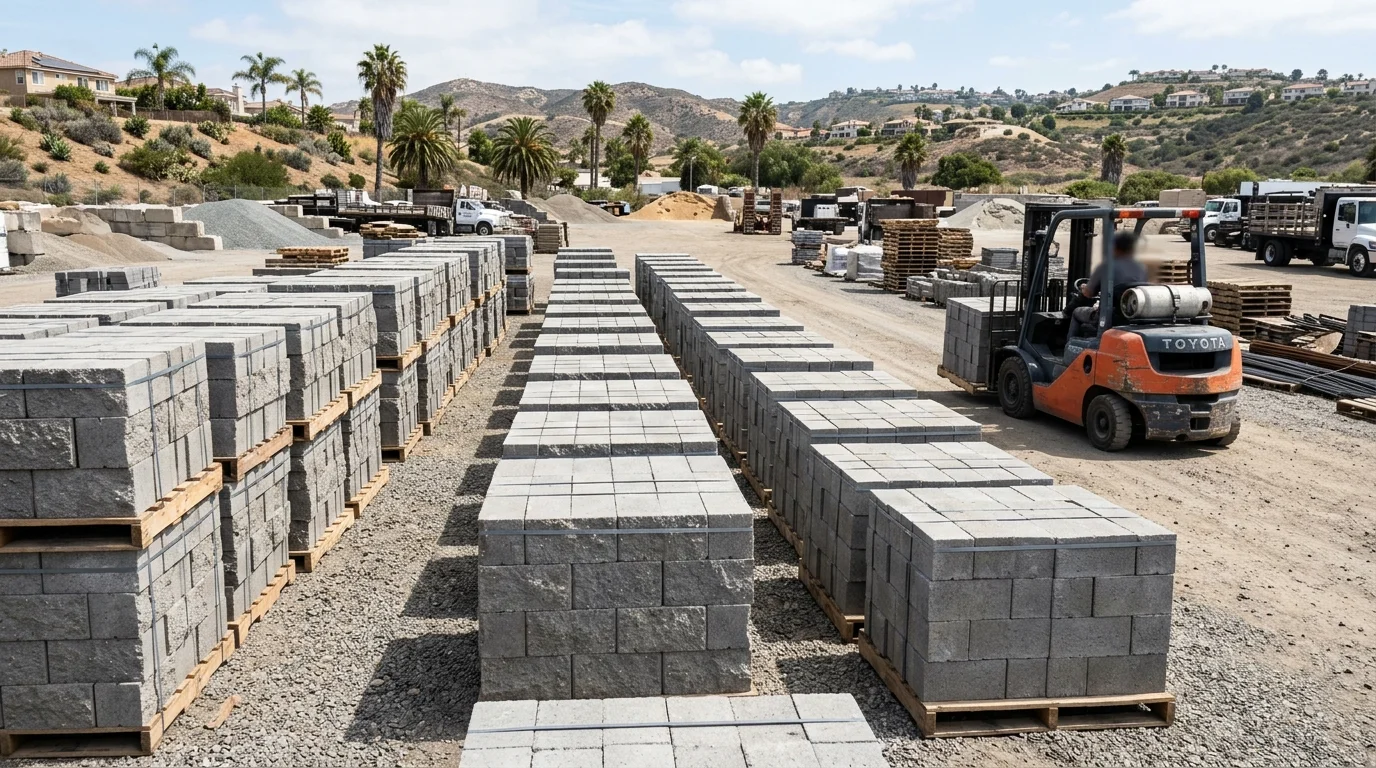
Masonry yards, landscape suppliers and big-box stores are three different products
These sellers may use similar words for very different block families. Don’t shop by color and face texture alone. Start with the product named on the wall plan, then find a seller carrying that exact unit.
A masonry yard is a practical starting point when the plan calls for concrete masonry units, mortar, grout, reinforcing steel, and caps. Ask whether the yard stocks every specified component. A wall isn’t a complete package when only the visible block is available.
Landscape suppliers are useful places to compare named segmental systems. Bring the manufacturer and product name if one has already been selected. Ask about matching corners, caps, curves, and the units needed for the first course. Our guide to segmental block walls explains where this wall type fits.
A big-box store may work when its exact product matches the approved design. Record the full product name and identifying information from the label. Don’t assume another block with similar dimensions belongs to the same system.
Availability can differ across coastal North County, inland North County, central San Diego, East County, and the South Bay. Confirm the quantity on hand, pickup location, and delivery area before placing an order. Also ask whether every pallet comes from the same product line and finish.
The safest buying sequence is simple. Identify the wall system first. Confirm the exact block second. Price the complete order third. A low block price doesn’t settle the decision when caps, corners, delivery, or specified components remain missing.
What to bring to the counter so the quantity is right
A seller can’t calculate a dependable order from one rough wall length. Bring a drawing that separates every straight run, bend, corner, step, and curve. Mark the planned top and bottom elevations for each section.
The counter should also receive these project details:
- The exact block manufacturer, product, size, and finish
- The length and planned height of each wall section
- Inside corners, outside corners, curves, stairs, and wall ends
- The number of cap units and any special corner units
- The design or permit plan, when one exists
- Photos showing the wall line and delivery access
- The contractor’s approved material list, if already selected
Have the seller calculate quantities using the published dimensions for that exact unit. Don’t apply a generic coverage number to a different block. Face dimensions, corner units, caps, and course layouts can change the order.
Ask the counter representative to separate standard units from special units on the quote. That makes missing corners or caps easier to spot. It also gives the contractor a clean list to review before anything ships.
For a reinforced or grouted masonry design, the visible block count is only one part of the order. The City of San Diego’s standard masonry designs include detailed requirements for concrete, grout, reinforcing steel, backfill, and drainage. Those specifications apply only within the bulletin’s stated scope. A contractor handling concrete block retaining walls can compare the material list with the actual plan.
Don’t order extra units from an invented waste percentage. Ask the seller and contractor to account for planned cuts, corners, possible breakage, and the seller’s return policy. Keep that quantity visible as a separate line.
Delivery, pallet deposits and the cost of a short load
Block pricing doesn’t show the full cost of getting materials onto the property. Request a written quote tied to the exact delivery address. “San Diego” isn’t specific enough for a delivery calculation.
A property near I-5 has a different approach than one reached through I-15, I-8, State Route 94, or State Route 125. The seller, carrier, and site access determine the actual delivery plan. Ask what vehicle will arrive and where it can legally unload.
The approved source file for this page doesn’t confirm any supplier’s delivery fee, pallet deposit, or short-load charge. Those amounts are set by individual sellers and carriers. Confirm the current terms directly before paying.
Ask whether the written quote includes:
- Delivery and unloading
- Any minimum order or short-load charge
- Pallet deposits and pallet-return conditions
- A second delivery for missing or backordered units
- Waiting, cancellation, or address-change charges
- Returns for unopened or unused material
- Pickup of rejected or damaged units
Also confirm the unloading point. Curbside delivery, driveway placement, and placement near the wall aren’t the same service. Send access photos and disclose gates, parked vehicles, overhead obstructions, slopes, and narrow turns. Let the carrier decide what its equipment can reach.
Inspect the delivery while the product labels remain visible. Compare the product, finish, quantity, caps, and special units with the written order. Record any visible damage using the seller’s stated process. Don’t mix or install disputed material until the seller explains its return or replacement terms.
Why buying the block is the easy part
A retaining wall is a soil, drainage, and load problem before it’s a block purchase. The wall plan must account for what’s being retained, what sits above it, and where collected water will go. Attractive block can’t answer those questions.
Inside City of San Diego limits, Information Bulletin 220 lists several building-permit triggers. A permit is required when the wall exceeds three feet from the top of its footing to its highest point. Other triggers include a backfill slope steeper than 1.5 horizontal to 1 vertical, surcharge loads, or impounded flammable liquids.
Tiered walls also have two separate triggers. One applies when the measured height from the bottom wall’s top of footing to the top wall exceeds six feet. The other applies when a footing crosses the lower wall’s 2-to-1 slope stability plane. A shorter wall can still require a permit because of another trigger.
The City’s standard masonry designs cover walls no higher than six feet under their stated conditions. They can’t be used for expansive soils, surcharge loads, flammable-liquid containment, or sites within the bulletin’s listed geologic hazards. Work outside those criteria requires design by a California-licensed civil engineer, structural engineer, or architect.
Unincorporated San Diego County uses a different exemption. Its PDS 110 document requires all listed conditions to be met. The wall must retain no more than three feet of soil, stay within six feet of total height, have level backfill, have no other structure within six feet, support no surcharge, and impound no flammable liquids.
Other incorporated cities set their own requirements. Confirm the current rules with that city’s building department before ordering.
When supplying your own block saves money and when it does not
Owner-supplied block saves money only when written, comparable quotes prove it. Compare a contractor-supplied option with an owner-supplied option using the same wall design and product. Include delivery, unloading, returns, missing units, storage, and pallet terms.
Buying directly may fit when the final design names the product, the seller confirms the full order, and the contractor accepts owner-supplied materials in writing. It also helps when responsibilities are clear. The contract should identify who checks quantities, receives delivery, reports damage, stores materials, and handles shortages.
It may not help when the wall design remains unsettled. A permit review, engineering change, soil issue, drainage revision, or newly identified surcharge can change the required system. Ordering early can leave you with material that doesn’t match the approved plan.
Contractors may also set their own terms for owner-supplied products. Confirm who is responsible for defective units, discontinued colors, missing components, and schedule changes caused by the supplier. Don’t assume the contractor’s warranty covers materials purchased by someone else. Read the proposed contract and warranty language before ordering.
Ask the contractor to review the seller’s final quote and product information. You can verify a contractor by license number, business name, or personnel name using the CSLB’s Check A License tool.
Wall Pro SD is a referral service. We connect homeowners with independent local contractors rather than selling block or performing construction. Homeowners planning a wall can start with our San Diego retaining wall service page.
When to call us
Bring in a licensed retaining wall pro before ordering when the wall supports a slope, driveway, walkway, fence, or structure. Professional review also matters when permits, drainage, tiered walls, or engineered plans are involved. Call us at (858) 400-4639 and we’ll connect you with a licensed local retaining wall contractor.