Clear blocked weep holes in a retaining wall
Blocked weep holes are one of the most common causes of hydrostatic pressure buildup behind retaining walls. Clearing them is a 30-minute task that can extend wall life significantly.
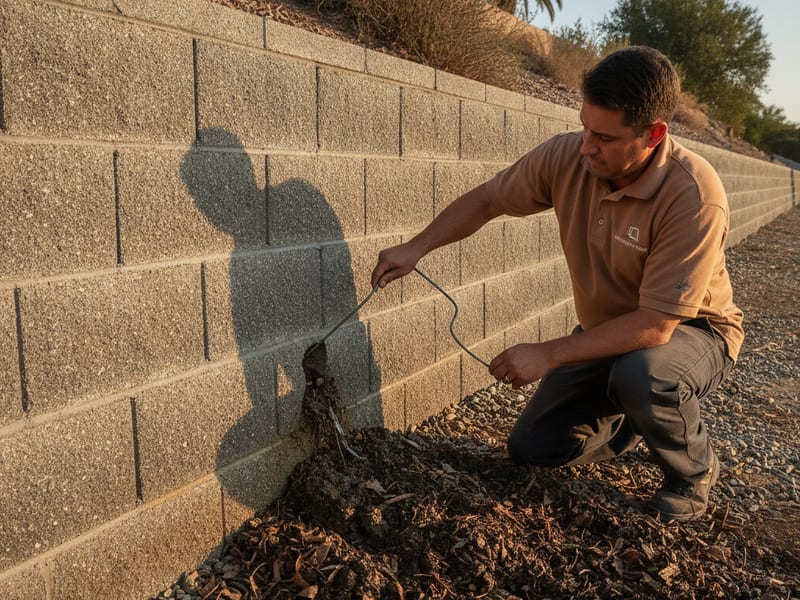
What you'll learn
- Where weep holes are located and what they look like
- How to clear blocked weep holes with basic tools
- How to tell if your wall is draining correctly after clearing
Step by step
- Locate weep holes at the wall base Weep holes in a block wall are typically at the first or second course above grade, either through a drilled block or at the base of the face. Look for small openings 1-2 inches in diameter.
- Clear debris with a wire probe Push a stiff bent wire (coat hanger gauge) into each weep hole and work it in a circular motion to break up mud, sediment, or plant material blocking the opening.
- Flush with water Pour water behind the wall at the top and confirm it exits through the cleared weep holes within 30-60 seconds. If it does not emerge, the drainage aggregate behind the wall may be clogged and needs professional excavation.
- Mark blocked holes that do not clear If a weep hole does not respond to wire probing and flushing, mark it for professional assessment. A blocked weep hole that cannot be cleared from the face may indicate collapsed drainage behind the wall.
If water is visibly staining the wall face (white mineral deposits) or the wall is leaning, clear the weep holes as a first step but call for a professional assessment before the next rain season.
Rather have a pro handle it?
We match you with licensed local wall crews across San Diego County. Leave a message and you get a call back.
Keep learning.
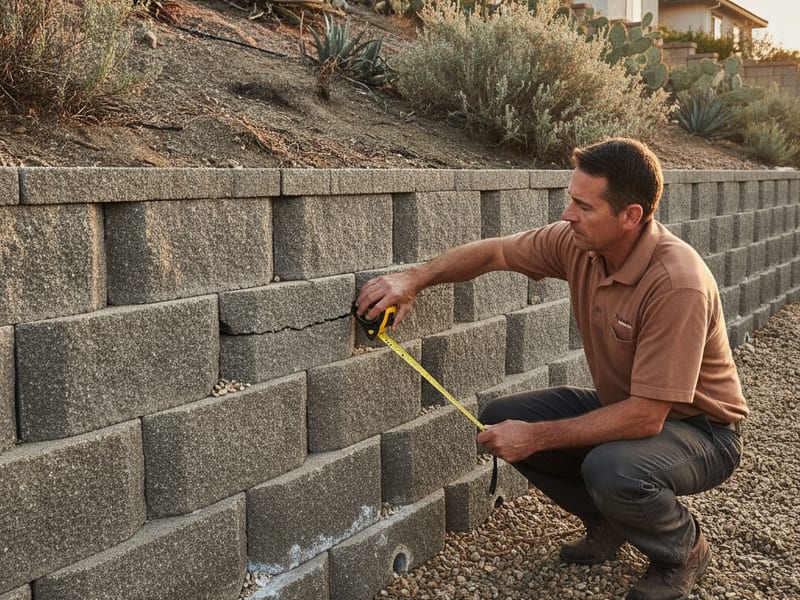
Inspect a retaining wall for early problems
Catching a drainage or structural problem early can save thousands in repairs. A 20-minute inspection after every wet season tells you whether your wall is holding up or starting to fail.
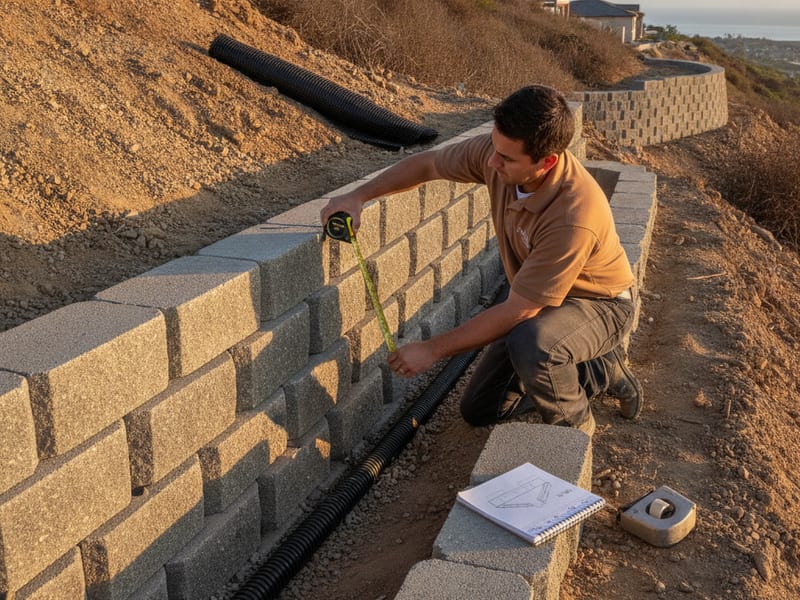
Measure wall height for permit purposes
Whether your wall needs a permit depends on its measured height, not how tall it looks from the yard. Learning to measure correctly takes 10 minutes and may determine whether your project requires engineering.
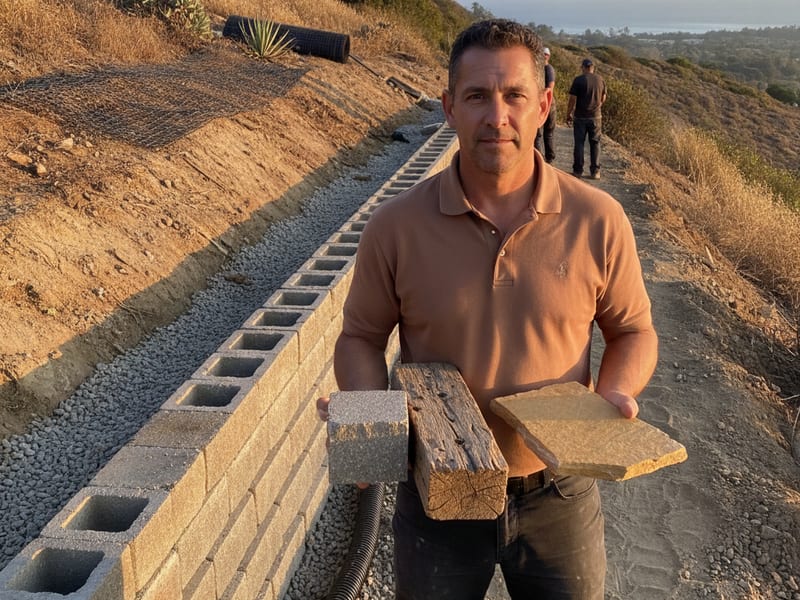
Identify your retaining wall material
Knowing what your wall is built from helps you get an accurate quote and understand your repair or replacement options. Most wall materials are identifiable from a 5-minute walkthrough.