Measure wall height for permit purposes
Whether your wall needs a permit depends on its measured height, not how tall it looks from the yard. Learning to measure correctly takes 10 minutes and may determine whether your project requires engineering.
What you'll learn
- Where permit height is measured from (top of footing, not grade)
- Why the City of San Diego trips at three feet, not the four feet you have read elsewhere
- How to document your measurement for a contractor estimate or permit inquiry
Step by step
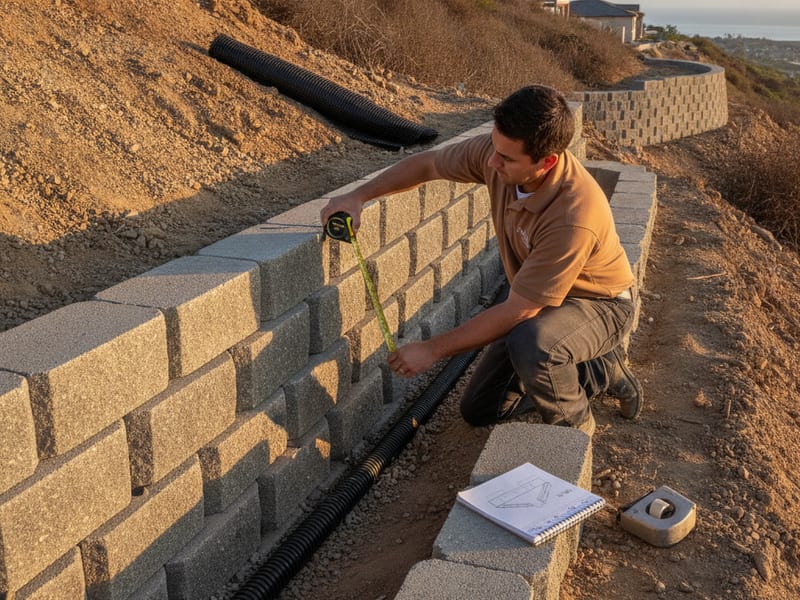
- Find the top of the footing Dig a small test hole at the wall face, or probe at the base with a rod to locate where the footing stops and the wall starts. The City measures permit height from the top of the footing, not from the ground surface at the wall face, so a wall can measure taller than it looks.
- Measure to the top of the wall Run a tape measure from the top of the footing to the highest point on the wall. Write down this number. In the City of San Diego anything over three feet by this measurement requires a permit; the unincorporated county and the other cities use their own tests, so confirm yours.
- Note surcharge loads above the wall Weight above the wall is called surcharge, and in the City of San Diego a driveway, walkway, structure footing or fence above a wall requires a permit at any height. Note what is behind and above the wall.
- Sketch the wall profile Draw a simple sketch showing wall height, length, and what sits above and below. This sketch helps any contractor or permit office understand your project without a site visit.
The City of San Diego trips at over three feet measured from the top of the footing to the highest point on the wall, per Information Bulletin 220. The four-foot number in wide circulation is a model-code figure the City does not use. When in doubt, assume a permit is required and verify with your city or the county before breaking ground.
Rather have a pro handle it?
We match you with licensed local wall crews across San Diego County. Leave a message and you get a call back.
Keep learning.
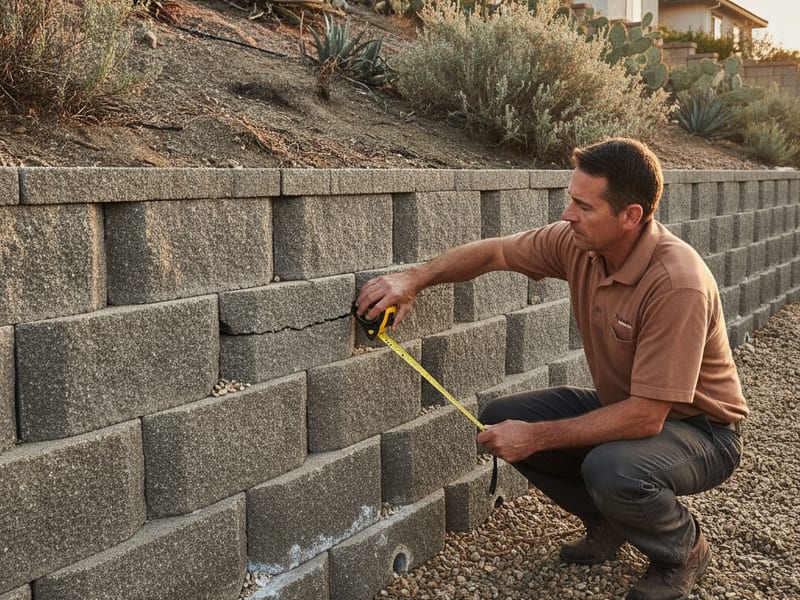
Inspect a retaining wall for early problems
Catching a drainage or structural problem early can save thousands in repairs. A 20-minute inspection after every wet season tells you whether your wall is holding up or starting to fail.
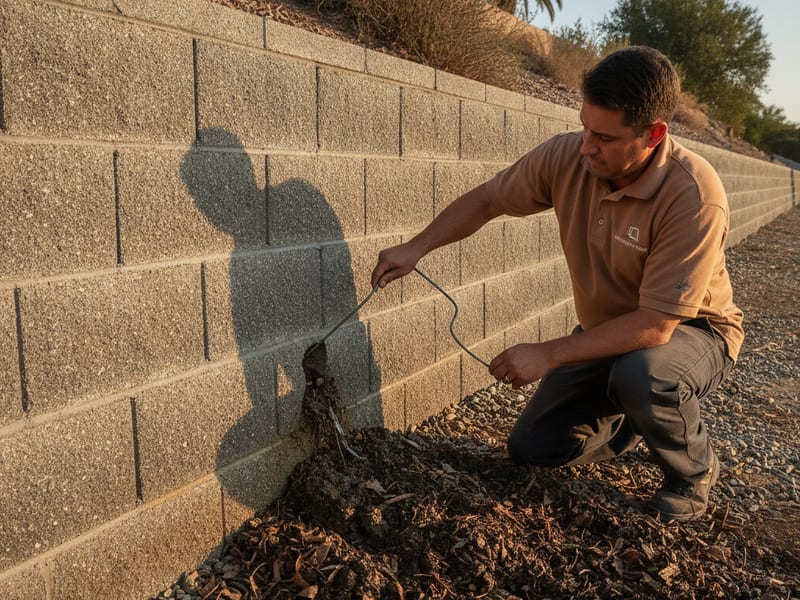
Clear blocked weep holes in a retaining wall
Blocked weep holes are one of the most common causes of hydrostatic pressure buildup behind retaining walls. Clearing them is a 30-minute task that can extend wall life significantly.
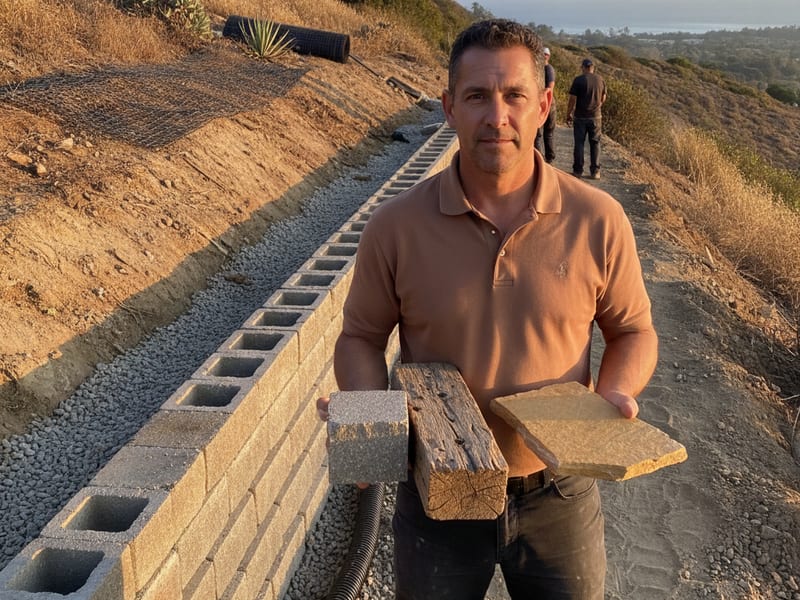
Identify your retaining wall material
Knowing what your wall is built from helps you get an accurate quote and understand your repair or replacement options. Most wall materials are identifiable from a 5-minute walkthrough.