Inspect a retaining wall for early problems
Catching a drainage or structural problem early can save thousands in repairs. A 20-minute inspection after every wet season tells you whether your wall is holding up or starting to fail.
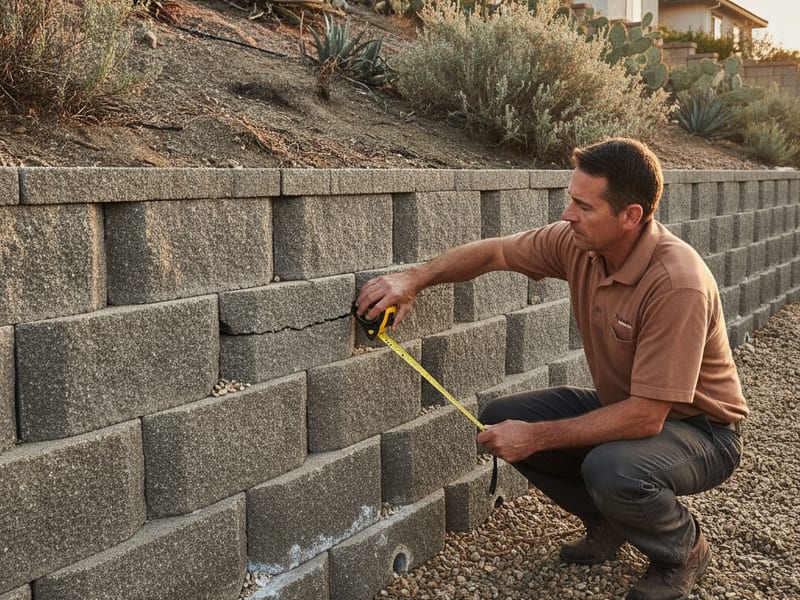
What you'll learn
- What early cracking and bowing look like on block and stone walls
- How to check drainage outlets and weep holes behind the wall
- Which warning signs mean call a pro now versus monitor for next season
Step by step
- Walk the full wall length Stand back and look for visible lean or bowing. Walk close and check each course for horizontal cracks, spalling, or separation at joints.
- Check the cap course Cap blocks or stone that have shifted or separated indicate movement below. Mark any gaps with tape for reference on the next inspection.
- Probe drainage outlets Use a stiff wire to probe weep holes and any pipe outlets at the wall base. Clear blockage with the wire and note whether water flows when you pour a bucket behind the wall.
- Inspect the base and toe Look for soil undercutting at the toe, mud leaking through the wall face, or soft spots in the grade behind the wall that signal drainage problems.
- Measure lean if needed Hold a 4-foot level against the wall face. Any gap over half an inch per 4 feet warrants a written assessment from a retaining wall crew.
Do your inspection within a week after a heavy rain when drainage issues and hydrostatic pressure effects are most visible.
Rather have a pro handle it?
We match you with licensed local wall crews across San Diego County. Leave a message and you get a call back.
Keep learning.
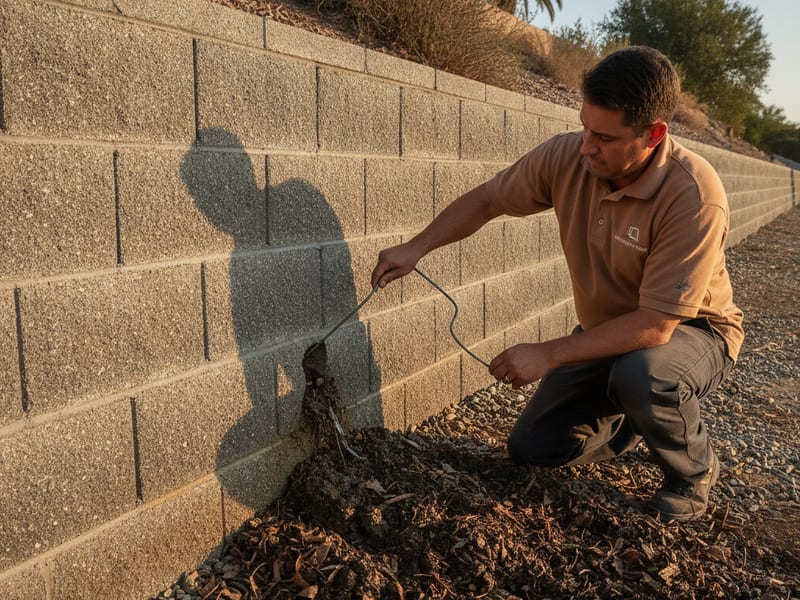
Clear blocked weep holes in a retaining wall
Blocked weep holes are one of the most common causes of hydrostatic pressure buildup behind retaining walls. Clearing them is a 30-minute task that can extend wall life significantly.
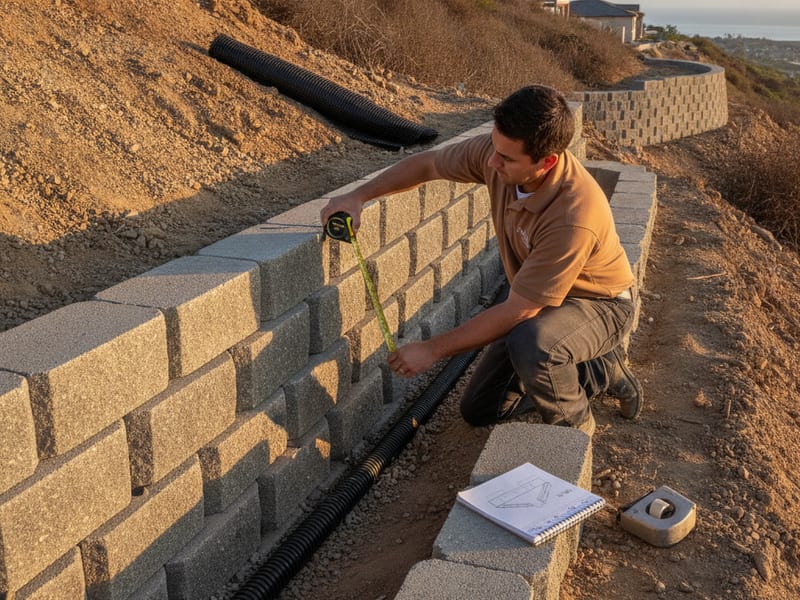
Measure wall height for permit purposes
Whether your wall needs a permit depends on its measured height, not how tall it looks from the yard. Learning to measure correctly takes 10 minutes and may determine whether your project requires engineering.
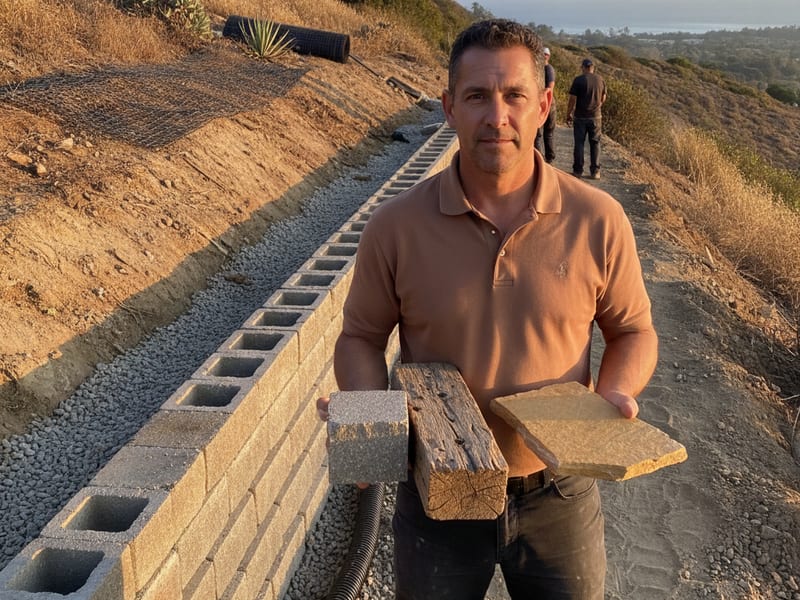
Identify your retaining wall material
Knowing what your wall is built from helps you get an accurate quote and understand your repair or replacement options. Most wall materials are identifiable from a 5-minute walkthrough.