Identify your retaining wall material
Knowing what your wall is built from helps you get an accurate quote and understand your repair or replacement options. Most wall materials are identifiable from a 5-minute walkthrough.
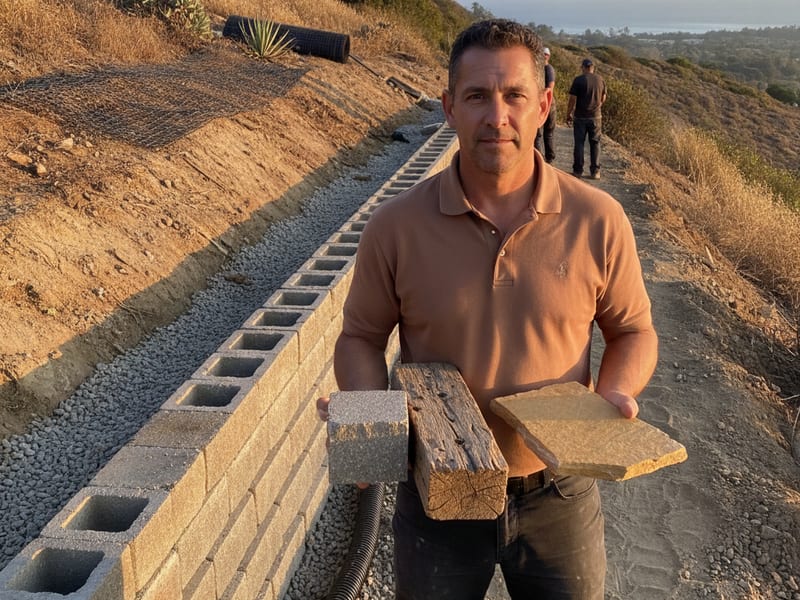
What you'll learn
- How to tell CMU block from poured concrete and natural stone
- How to identify segmental retaining wall block systems by their shape
- Why material identification matters for repair versus replacement decisions
Step by step
- Look at the face texture Concrete block (CMU) has visible mortar joints and uniform rectangular units. Poured concrete is monolithic with no joints except construction or control joints. Natural stone has irregular shapes and varied color.
- Check for segmental block features Segmental blocks like Allan Block, Versa-Lok, or Keystone have a slight backward tilt (batter) and often a textured face. They are stacked without mortar and each course sets back slightly from the one below.
- Identify timber walls Timber walls use horizontal 4x6, 6x6, or 6x8 treated wood members. Look for bolt heads or lag screws holding courses together and deadman timbers running back into the slope at intervals.
- Note visible damage Take photos of cracks, lean, staining, or bulging at each wall section. Include a tape measure in the photo for scale. This documentation helps any contractor give you an accurate remote estimate before a site visit.
If you are not sure whether your wall is CMU block or poured concrete, tap it with a metal object. Block walls sound hollow at the cores; poured concrete sounds solid throughout.
Rather have a pro handle it?
We match you with licensed local wall crews across San Diego County. Leave a message and you get a call back.
Keep learning.
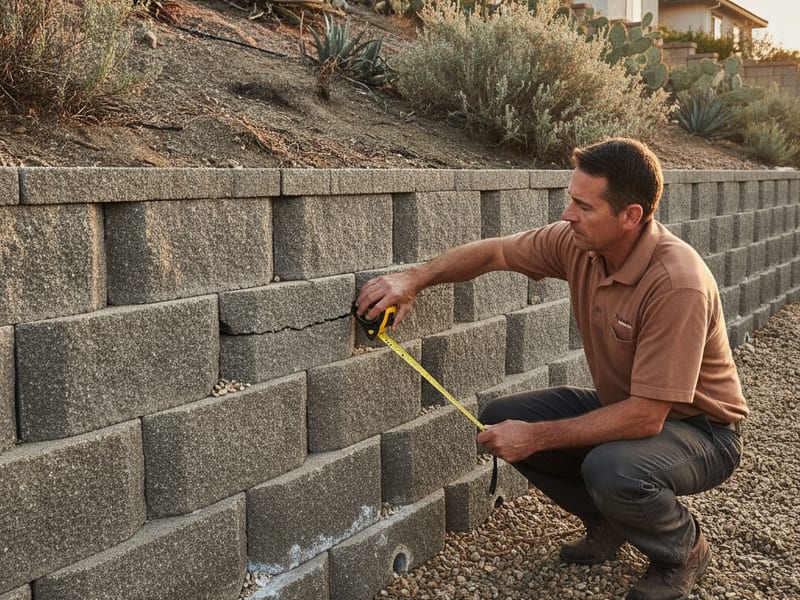
Inspect a retaining wall for early problems
Catching a drainage or structural problem early can save thousands in repairs. A 20-minute inspection after every wet season tells you whether your wall is holding up or starting to fail.
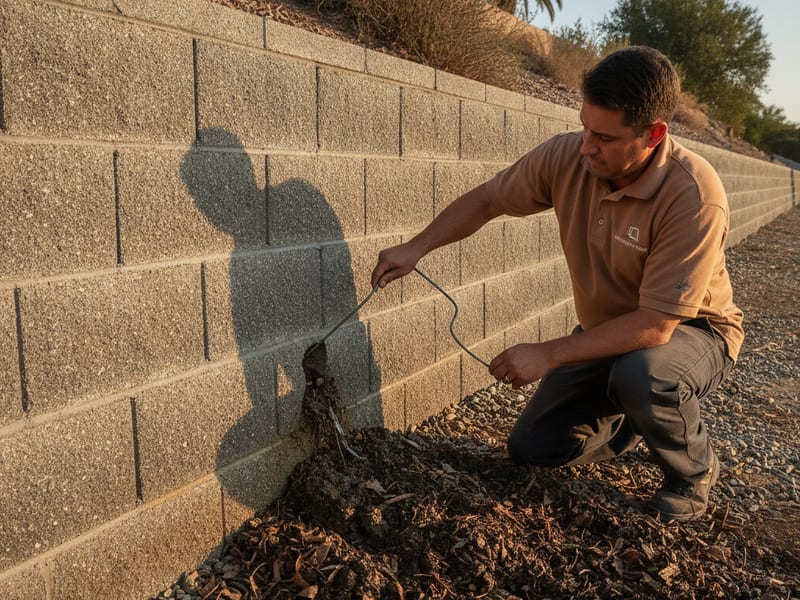
Clear blocked weep holes in a retaining wall
Blocked weep holes are one of the most common causes of hydrostatic pressure buildup behind retaining walls. Clearing them is a 30-minute task that can extend wall life significantly.
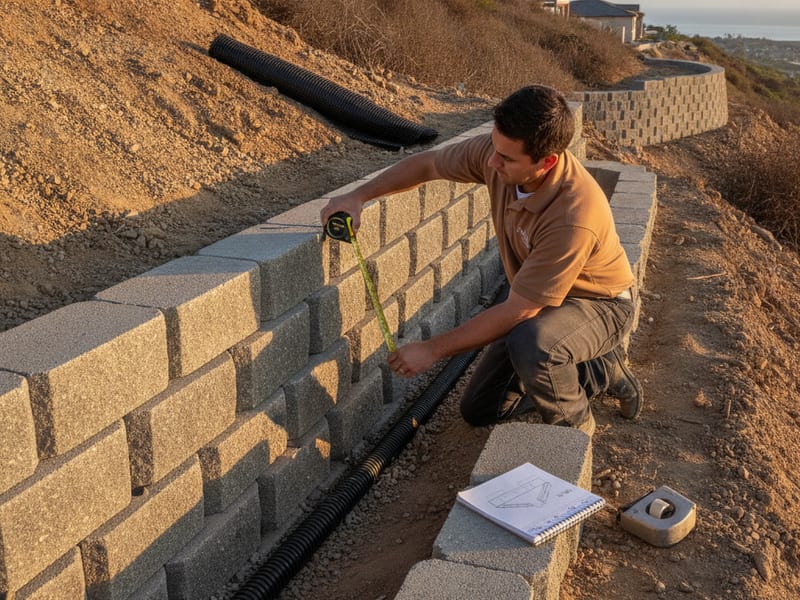
Measure wall height for permit purposes
Whether your wall needs a permit depends on its measured height, not how tall it looks from the yard. Learning to measure correctly takes 10 minutes and may determine whether your project requires engineering.